

I Bought a $34 Loaf of Bread!
Plus! Something very good!! Something very bad!!! More worst enemies!!!!


Hello everyone,
Welcome to Issue #201 of CAFÉ ANNE!
Oh boy. In last week’s issue, after divulging the results of my street survey asking 200 New Yorkers to reveal their worst enemy, I asked you to tell me yours.
The responses in the comments were often delightfully NYC-specific, and the one most upvoted by readers was from Maria D. who wrote, “My worst enemy is anyone who plays their music (or even worse, their TikToks or game) out loud on public transit.”
I get it, but I kind of love this phenomenon, mainly because I’m curious to know what others are listening to. To which Kant might say, “But what if everybody did this?” to which I’d respond, “Even better!”
Other popular responses: people who leave dog poop bags on the sidewalk, drivers who cut in at the last minute on the exit ramp, people who prop their feet on the subway seats, people who leave their shopping carts in the middle of the parking lot. “Entitled people are the enemy!” was how reader Steve summed it up.
Moving on, I have something super great to report, along with something horrifying.
The wonderful thing: Goodreads, the keep-track-of-your-books app, is finally introducing a “Did Not Finish” shelf to display all the titles you threw out the window halfway through.
I’ve waited my whole life for this, mainly because until now, I got zero credit for all the books I quit—which rivals the number I finish. My rule of thumb (and I’m curious to hear yours): if I’m not enjoying a book within the first thirty pages, I’m done!
So far this year I proudly Did Not Finish The Screwtape Letters by C.S. Lewis, Trip by Amie Borrodale, Housekeeping by Marilyn Robinson and The Safekeep by Yael van der Wouden. If you want to check out the books I did manage to finish, check out my Goodreads page (and connect as my Goodreads friend!).
And here’s the awful thing: the MTA recently announced a pilot program playing 30-second audio ads in subway stations. How am I supposed to eavesdrop on my fellow passenger’s TikTok if it’s drowned out by ads for the School of Practical Philosophy?
Seriously, we simply can’t allow this. There have to be a few moments a day in which we can be alone with our own thoughts, or we shall go mad. Here is the comment form you can use to tell the MTA exactly what you think of their little experiment. Have fun!
Finally, a bunch more new paid subscriptions came in over the past week: Huge shoutouts to Pete M., Marianna S., Alaina Z., Randall W., Rosemary M., Christine H. and Marissa M.!
Since I started pestering you all for money a few weeks ago, the number of paid subscriptions has jumped considerably—from 435 to 471! This makes a big difference in my budget. But I am still about 330 paids away from the roughly 800 I need to make this free newsletter self-sustaining. We shall get there! I know it! Because YOU will subscribe TODAY! (And did I mention that Thursday is my birthday?)
I am very excited for this week’s issue, of course. We have an account of my encounter with a $34 loaf of bread. Please enjoy.
Regards!
Anne


The following are advertisements from CAFÉ ANNE sponsors.
INDEPENDENT WORK DOESN’T HAVE TO MEAN WORKING ALONE
Solo arts work is rewarding. And lonely. CARE (the Consortium of Arts Related Entrepreneurs) brings independent arts entrepreneurs together for support, skills & connection. Turn isolation into collaboration. Find your crew. Use code CafeCARES15 for 15% off your 1st payment. Doors open March 23-April 3.

THE POUROVER—A NEWSLETTER ABOUT COFFEE
Ever wondered what’s really behind your morning brew? The Pourover is a newsletter all about coffee and how it connects to the wider world. Enjoy deeply-researched articles on the drink’s history, culture, and politics, all delivered direct to your inbox. Subscribe now!

HEALING THROUGH WRITING FESTIVAL (Mar 30–Apr 2).
A free 4-day online gathering for curious humans who suspect their life is stranger (and more meaningful) than they admit. Explore memoir-writing & somatic storytelling with 25+ writers & healers. Your subway ride might be a chapter! Register today!

Interested in advertising your product/service or promoting your own newsletter in the next issue of CAFÉ ANNE? Click here for details.

DEPT. OF STICKER SHOCK
I Bought a $34 Loaf of Bread!
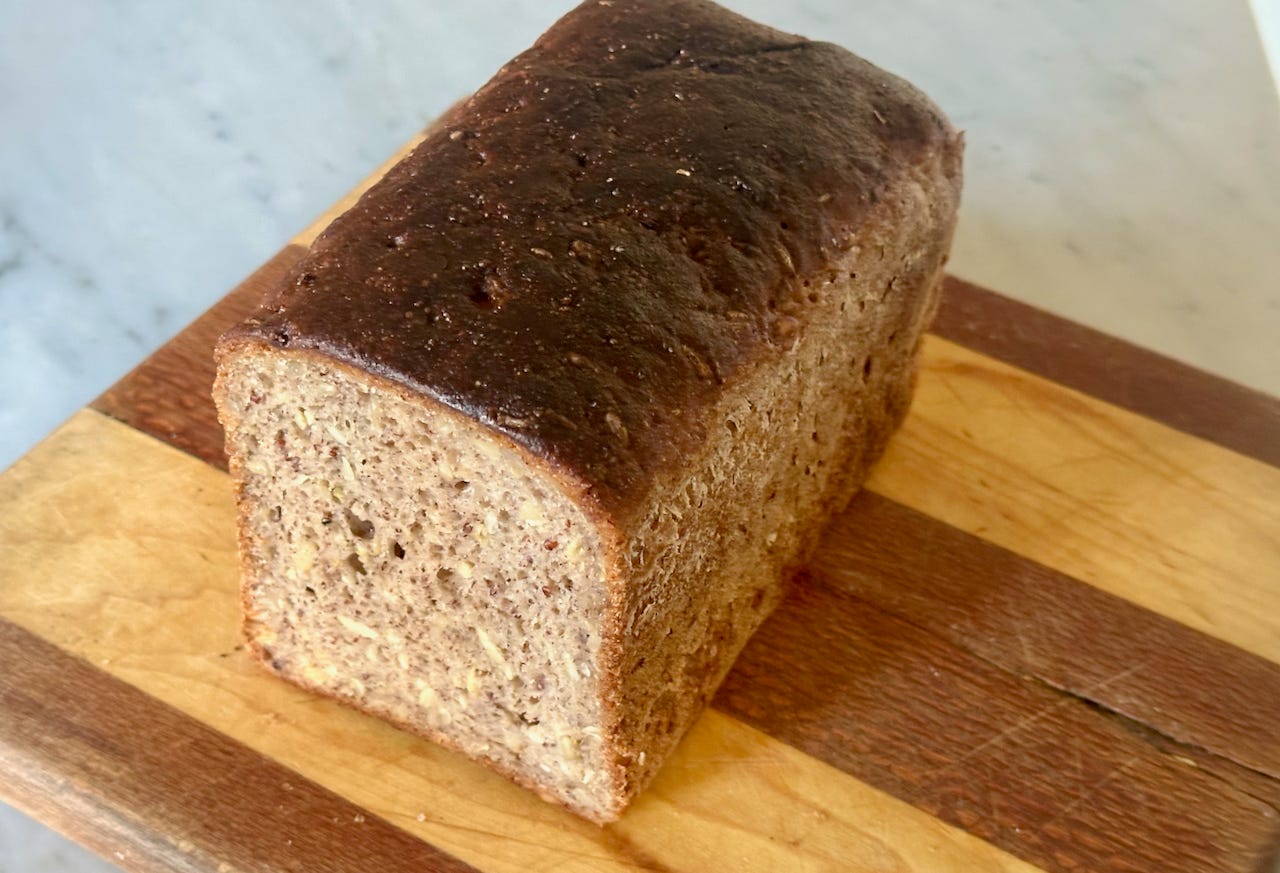
Remember last summer when I spent $28 on a cup of coffee? Well, the thrills continue. I just spent $34 on a loaf of bread! NYC! NYC! NYC!
Is there any good reason for bread to cost this much? My unambiguous conclusion after trying the bread and exploring the back story: Sort of! Maybe!
Let me back up a bit.
I did not plan to spend this much on bread when I stopped by Meadow Lane, the Tribeca food market where I first spotted the loaf next to the $9 donuts. I just wanted to check out the shop because it had generated quite a buzz when it opened last November.
The owner, a fellow in his twenties named Sammy Nussdorf, had been posting on TikTok for years about opening his “dream grocery store,” as Vogue noted in a lengthy write-up. On its opening weekend, the shop had a bouncer posted at the door to control the block-long crowds queuing up to buy chicken salad and kale chips.
The interest was partly centered on Mr. Nussdorf, who grew up in a billionaire New York family and worked at a venture capital firm before amassing a TikTok fan club of 150,000 followers and delving into the grocery business. He named his shop Meadow Lane after the beachfront street in Southampton where homes sell for $30-$110 million and residents—typically hedge fund guys—share a helipad. These details alone predictably made a lot of people lose their minds.
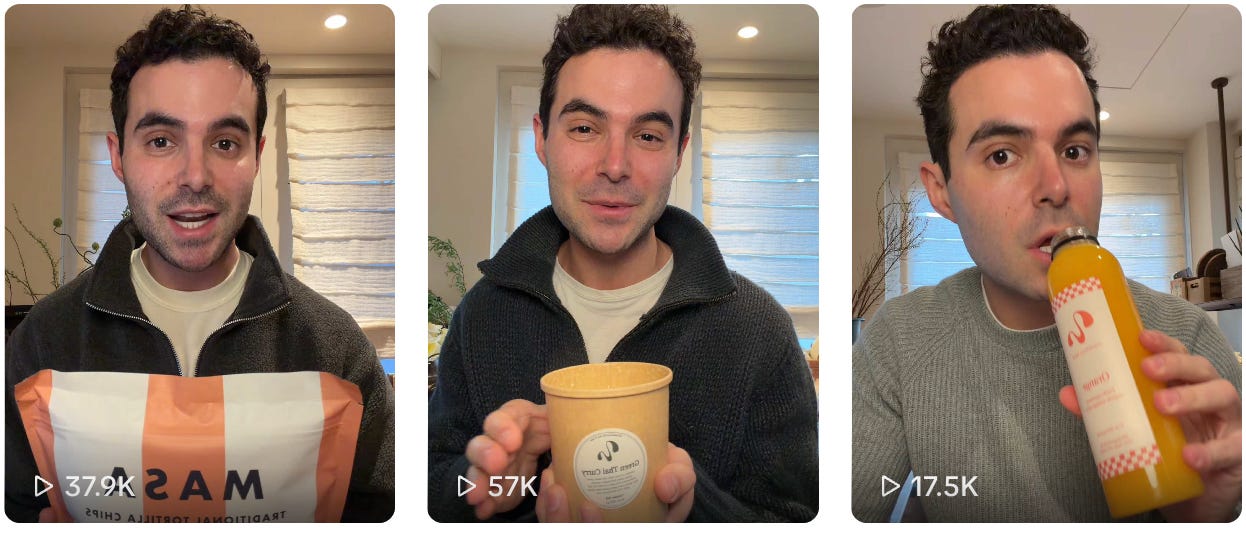
And then there were the price tags: $12 for a bunch of grapes, $14 for a bag of tortilla chips. “Swanky New NYC Grocer Facing Death Threats Over Insane Prices,” the New York Post reported.
By the time I stopped by at the end of February, the hype had died. There were no crowds and no bouncer to greet me at the entrance—just a stack of fetching wicker baskets, offered as though one was about to gather daisies on a hillside.
Reader, I am pleased to report that I have never seen anything like this food market. It is the opposite, in every way, of your typical NYC bodega.
There were framed art prints and vases of flowers everywhere. The minimal selection of prepared and packaged foods was softly lit and displayed in custom cases crafted in Italy. And in a city where unused square footage is the ultimate flex, this place featured vast swaths of empty floor space. It looked less like a food market and more like a food museum.
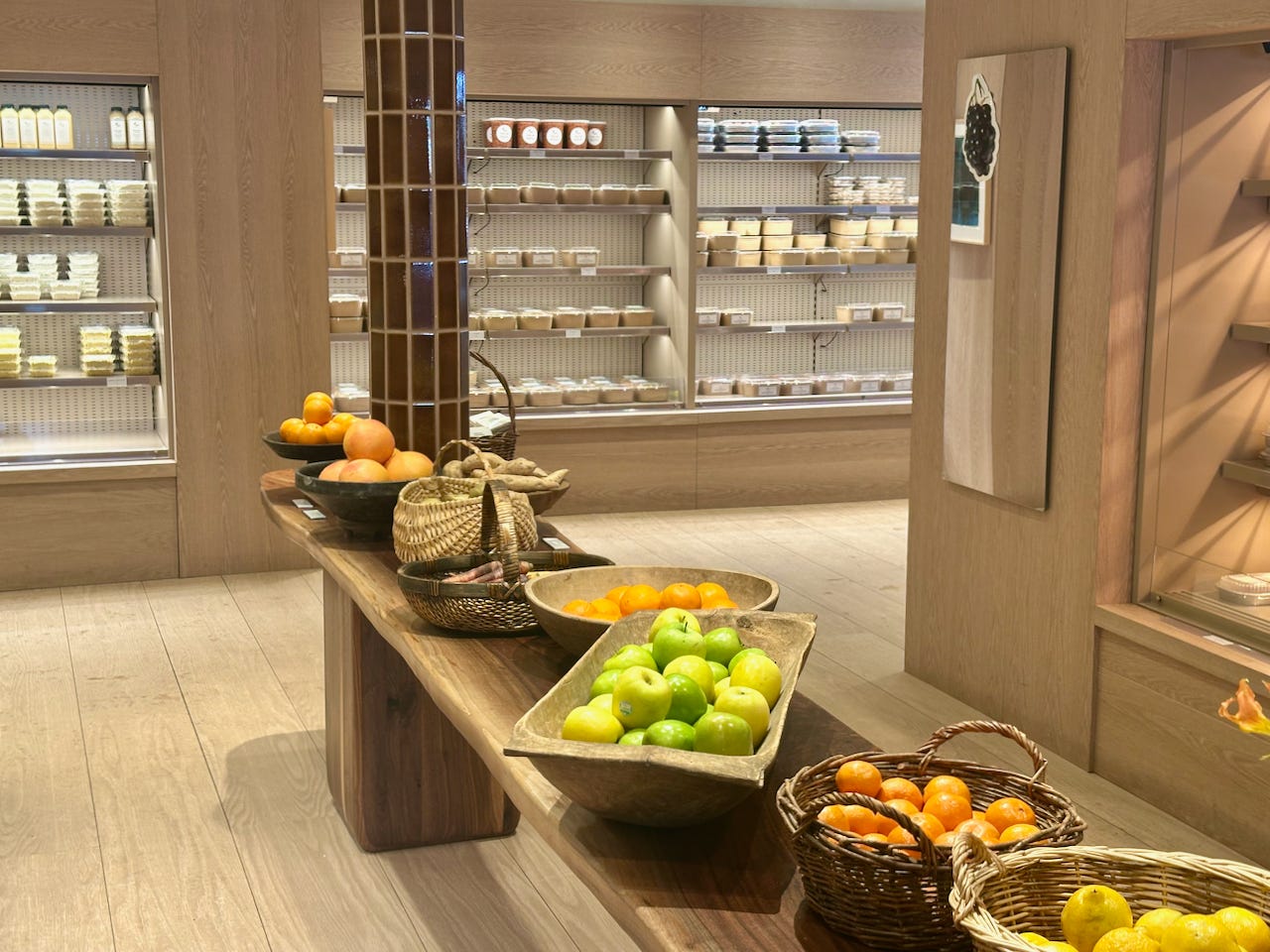
The stock clerks, meanwhile, were ridiculously attractive. In contrast to the hustlers sweating in the aisles of your local C-Town, they moved slowly and gracefully. I watched one staffer spend ten minutes dreamily arranging the yogurt display like a Zen master presiding over a tea ceremony and another glide between the snack section and stock room replenishing the beet chips two bags at a time.
I was also amused to see everything priced in whole-dollar increments. Limes cost $1 each, a jar of mustard $7 and a small container of chicken salad $12. No $3.79 this or $7.49 that—it’s easier, it seems, to just round every price up to the next dollar.
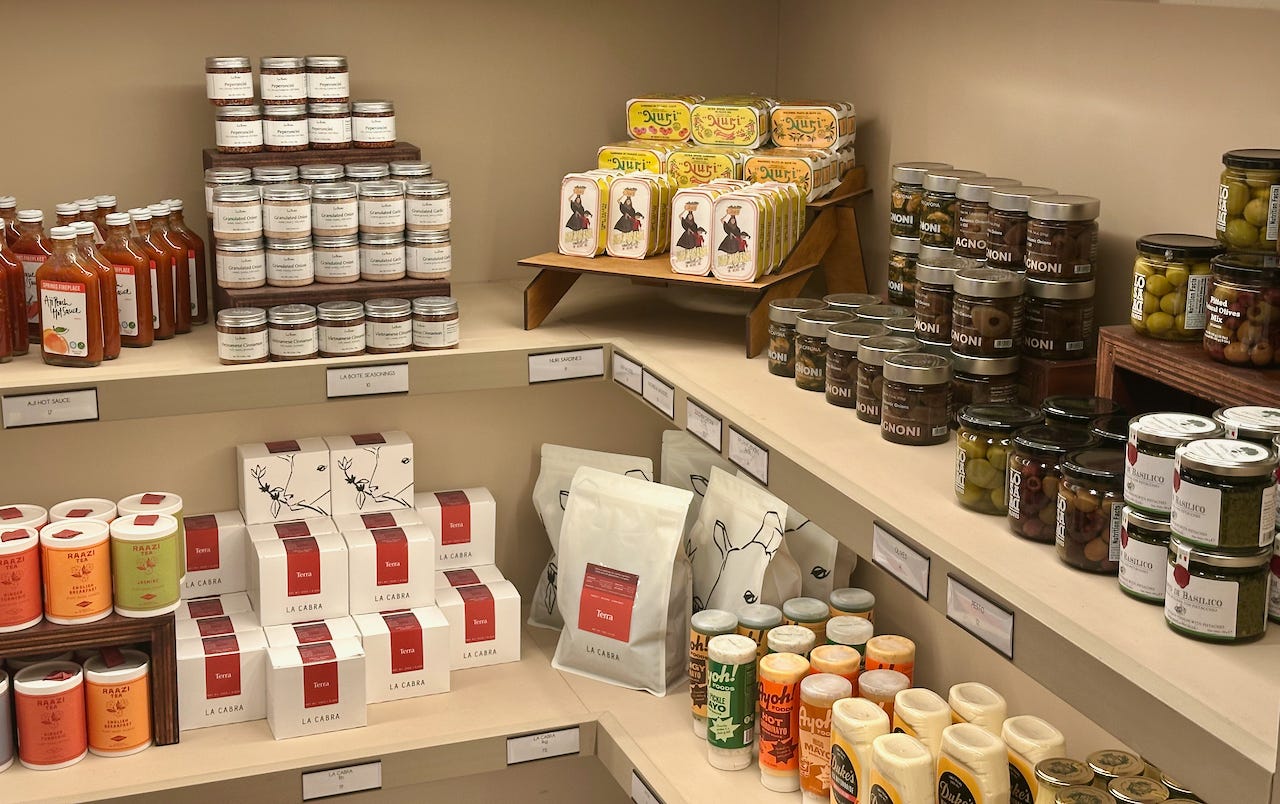
And these prices were startling even by gourmet grocery standards: $9 for a quart of milk, $14 for a small container of yogurt, $18 for a dozen eggs, $30 for a whole, frozen chicken. In most of these cases, there was no lower-priced option available.
And then I spotted it: the $34 Sixteen Mill Gluten-Free Seeded Sourdough loaf, the only bread available in the store.
“Wow!” I said out loud.
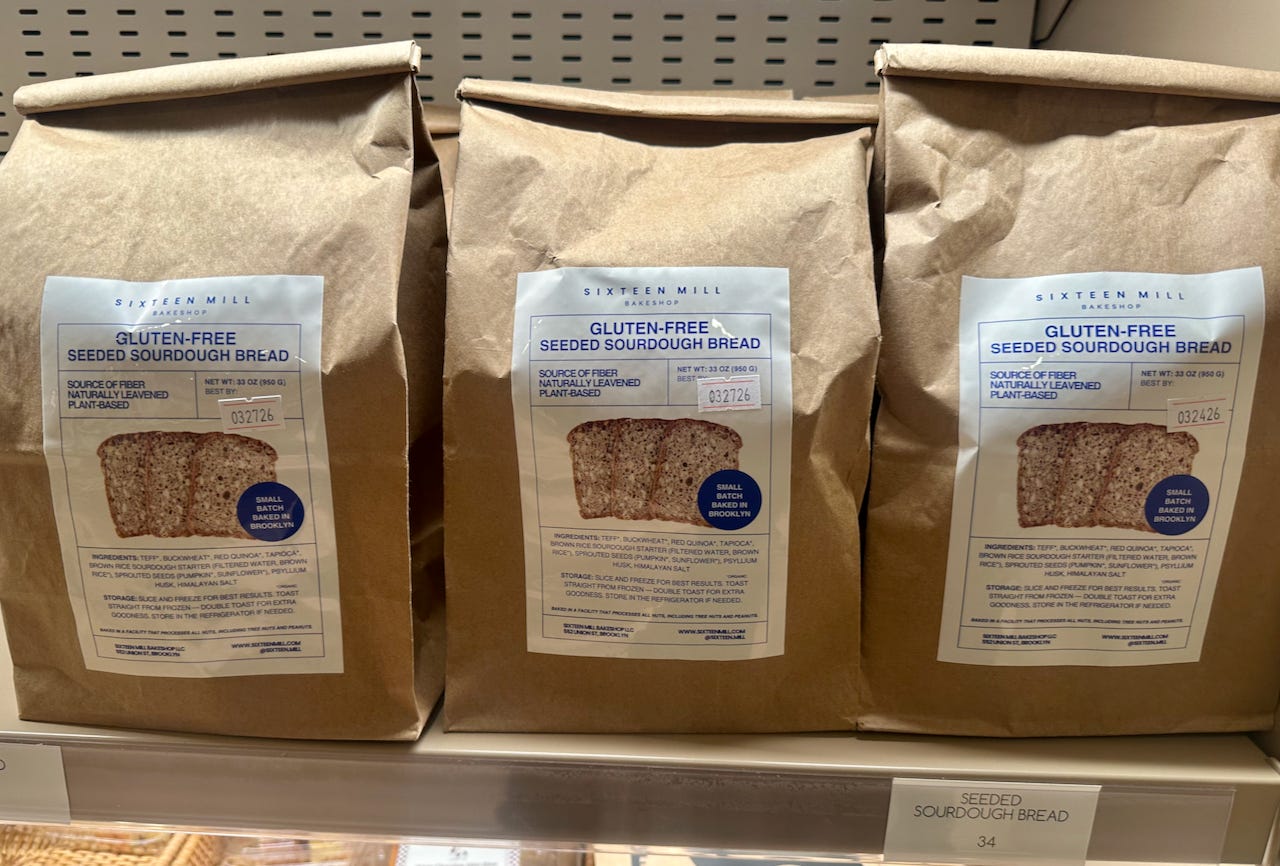
I was curious to try it, but had to let it go. You can’t spend $34 on a single loaf of bread.
Before I left the store, however, I spotted a young man standing in the check-out line, clutching one of the loaves. Aha! Maybe he could fill me in? But when he spotted me staring, he left the line, shoved the bread back on the shelf and bolted out the door. Clearly, I was not the only one experiencing a gluten-free crisis of inner conflict.

Three weeks went by. I kept thinking about the bread. Finally, last Wednesday, I broke down and returned to Meadow Lane. The bread was still there, in its brown paper wrapping. I picked a loaf from the shelf and nearly fell over. It was so heavy I suspected it contained osmium flour or perhaps an entire alternate universe.
When I got home I released the loaf from its homely packaging. It was smaller than your typical supermarket loaf, but at two pounds, solid enough to serve as a doorstop. It was dark, packed with seeds and smelled of the earth.
This was clearly no ordinary bread. If you’re going to charge a crazy price for something, it has to be unusual. The $28 coffee, for example, was unlike any coffee I’ve ever tried—terrible, but in an interesting way.
I was excited to sample my first slice. But here’s the problem: unlike coffee, bread is not my thing. If I’m going to eat carbs, it should be in the form of something fun, like cupcakes. And if I do eat bread, it’s not going to be sourdough, which I dislike, and it’s certainly not going to be gluten-free, because that’s not even really bread.
Happily, my bread-loving neighbor Shelly was available to help with the tasting. “A little burnt on the top, but other than that it looks good,” said Shelly, peering at our specimin.
“Pick it up!” I said.
“I should probably wash my hands first,” said Shelly.
“Nah,” I said.
Shelly hefted it from the cutting board. “Holy crap,” she said, “that’s a slab of bread!”
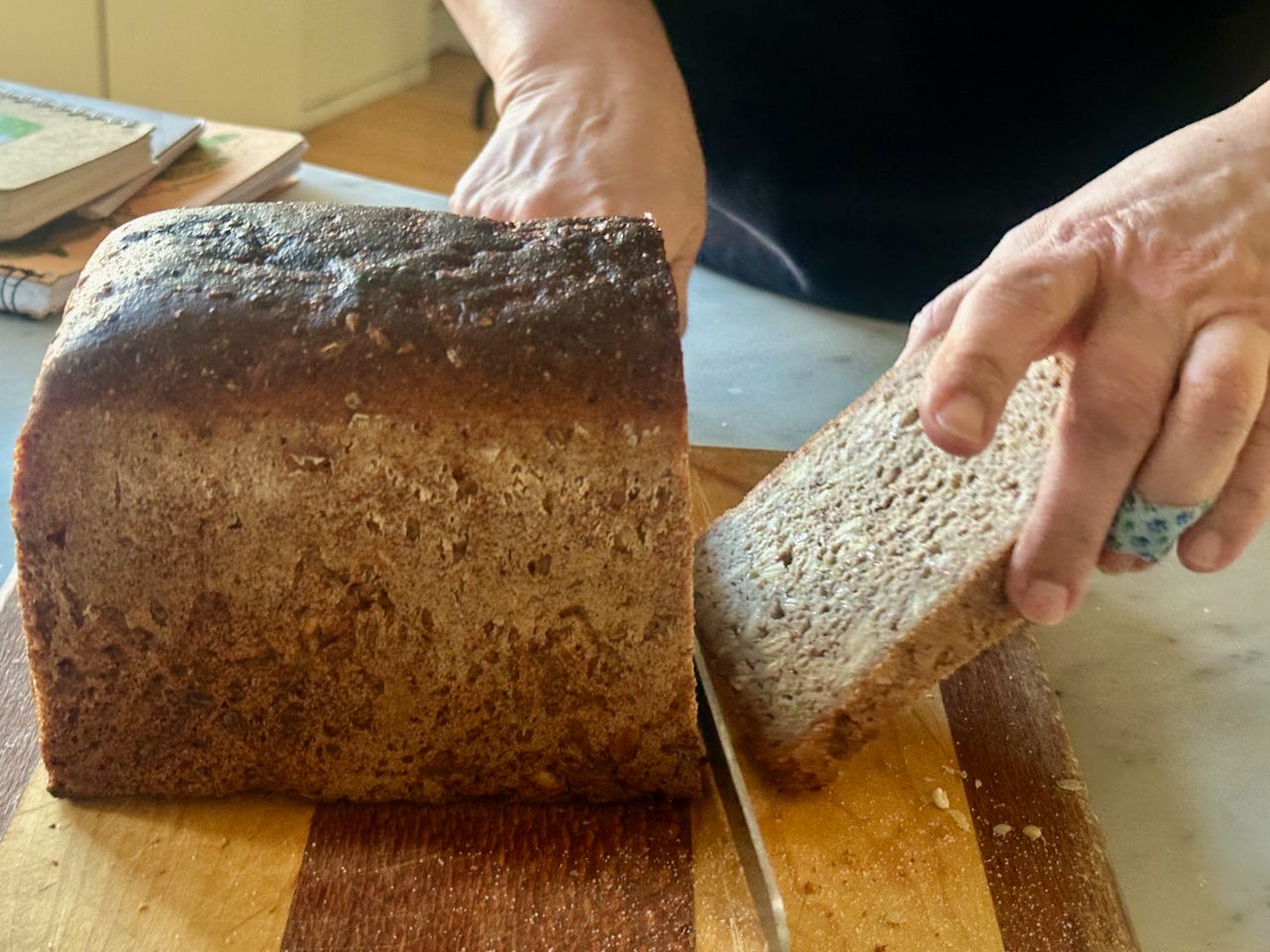
She cut a thick slice and we each took a bite. As predicted, it wasn’t my thing. Shelly, however, nodded appreciatively.
“It tastes hearty,” she said. “If I were going to work in the mines, I would have a sandwich make out of two slabs of this with some sort of chunk of meat in the middle. This is bread to sustain you.”
She took another bite and fell silent as she chewed, and chewed. “These are not dramatic pauses, these are chewing pauses,” she said after some time had passed. “I kind of like it, but I would not buy it. It’s a lot of work!”
So then I told her the price and she almost spat out her mouthful. “Are you kidding me? Was it made by virgins?”
Later that evening, some friends familiar with the gluten-free bread scene came by. Marj and Cara both loved the loaf and assured me that gluten-free bread is always more expensive: they typically pay $10 to $14 for a decent loaf.
“This cost $34,” I told them.
“Holy s—!” said Marj.
“Oh my god, that’s crazy!” said Cara, who is a real estate broker. “Part of that is probably the rent in Tribeca.”

She is right, of course.
I had already done a little research on Meadow Lane’s storefront space at 355 Greenwich Street, which is about the size of a NYC apartment. I don’t know how much Mr. Nussdorf is actually paying, but according to LoopNet, the asking rent was $22,000 a month. That’s a lot of kale chips!
And here’s more evidence for the notion that rent plays a big role in the price: a quick Google search revealed that you can buy the exact same loaf for $24 at Sixteen Mill Bakeshop, the Brooklyn business where the loaves are baked.
When I got bakery owner Talia Tutak on the phone, she confirmed that she sells the loaf for $24 at her shop, and told me she offers it wholesale for $17. She was very surprised to hear Meadow Lane charges $34 for her bread, “but I have no control over what my partners charge,” she said.
Her story, as it turns out, is sort of the opposite of Mr. Nussdorf’s. She is from Poland, moved here in 2016 and started her business baking at home and selling her gluten-free goods at farmers markets around the city.
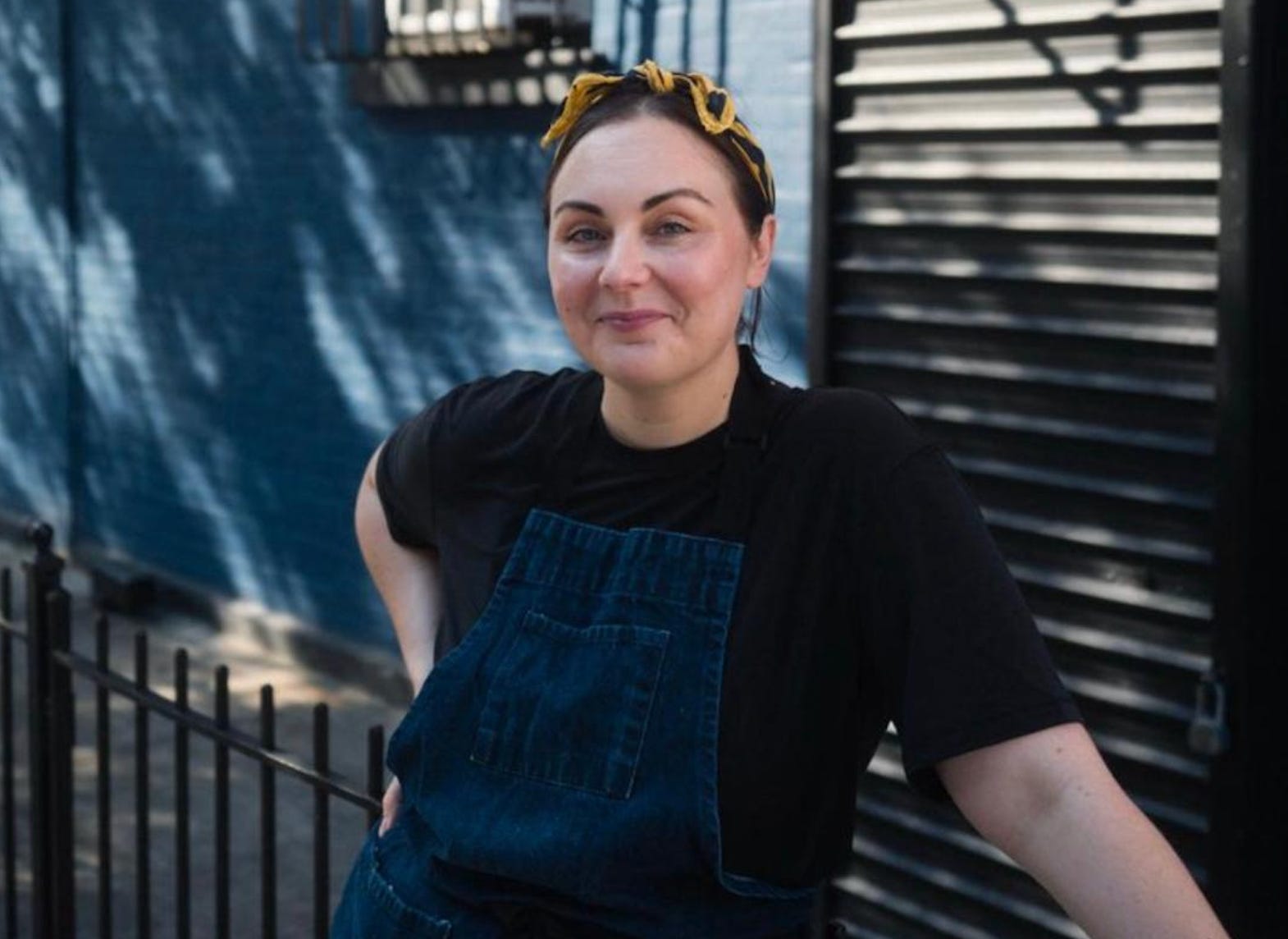
She opened her small storefront bakery in 2023 and now employs a staff of nine. The business is doing well, she said, and the seeded sourdough loaf is her best seller. Many buy it as a special treat, she said, but some buy two or three loaves a week: “They live on that bread.”
A nice success story, right? But even the $24 she charges for the loaf at her bakery seems outlandish. I asked Ms. Tutak if she gets much pushback.
“There are people who question the price, but we have an answer for why it’s so expensive. We try to educate people,” said Ms. Tutak.
Factor one: the ingredients. The main component, organic teff flour, costs roughly $2.80 a pound compared to 70 cents a pound for high-quality wheat flour. And then there’s all those sprouted sunflower and pumpkin seeds and quinoa and psyllium husk and trendy Himalayan sea salt.
Factor two: sourcing. “Gluten-free baking is not the easiest business to run. The logistics are crazy,” said Ms. Tutak. I won’t get into the details because it’s a little boring. But believe you me, Ms. Tutak has supply chain issues up the wazoo, which take a lot of time to sort out.
Factor three: the baking process. Normal bread rises fast and bakes in half an hour at a high temperature. Gluten-free sourdough takes a day to rise and bakes for two hours—low and slow, as Ms. Tutak put it. It’s prone to developing huge holes in the middle, so every loaf must be cut in half and inspected before it’s sold. The recipes, meanwhile, must be adjusted daily to account for the weather, and tweaked every time the bakery switches suppliers or things can go very wrong, very fast.
So I get it. Buying Sixteen Mill bread is like buying a pricey handbag, made with special materials and careful craftsmanship. Only in this case you eat it—preferably toasted and buttered, Ms. Tutak advised.
I tried toasting it this weekend, by the way. And you know what? Singed and slathered with butter, it was some of the best bread I’ve ever eaten—a nutty, crunchy delight. I had seconds. A friend who helped with the tasting agreed, and asked for a second slice, and a third.
Of course, now I was curious to check out the Sixteen Mill Bakeshop, located in a still very industrial section of Gowanus.
It’s a far cry from Meadow Lane. As Ms. Tutak warned, her bakery is already outgrowing its 1,200-square-foot space, so she had to move the customer service counter and café out to the sidewalk. Customers line up at the service window to buy coffee, bread and pastries to eat at the folding tables and chairs overlooking a gritty stretch of Union Street.
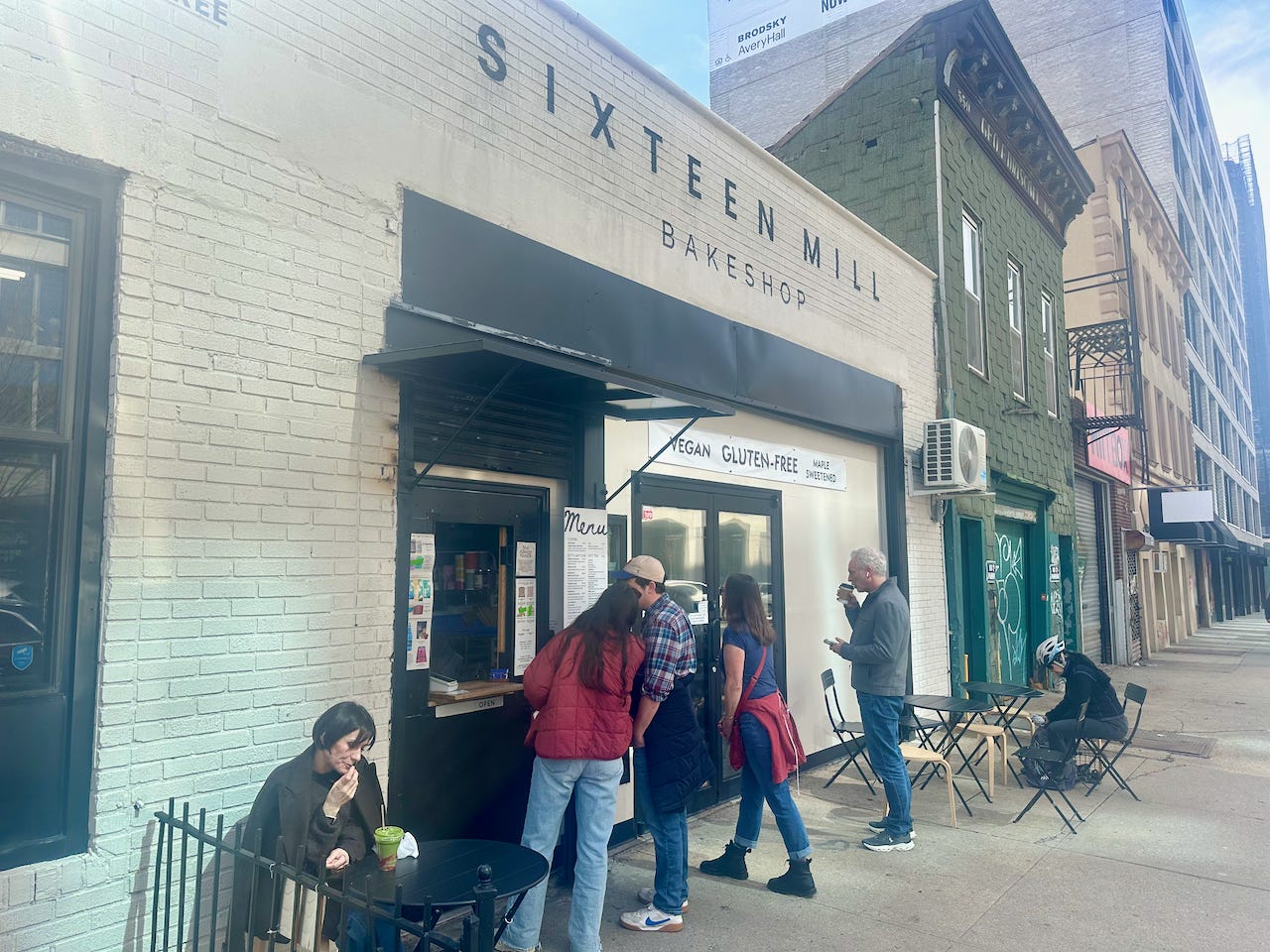
It’s a ridiculously Brooklyn experience, to be sure—just as buying the bread for $34 in Tribeca is a very Manhattan experience.
So to answer the question: Would I buy this bread again? Absolutely not. Would I eat it again? Toasted with butter—yes please!
Reader, you can have a gift loaf delivered to my door through the Sixteen Mill website for just $24. Plus, of course, a $10 delivery fee.

CAFÉ ANNE, a free weekly newsletter about NYC, is created by Brooklyn journalist Anne Kadet. Subscribe to get the latest issue every Monday.
If subway ads become a "thing," people will just start ignoring all announcements altogether, including ones about service changes.
(The silver lining is most subway speakers sound like Charlie Brown's teacher anyway.)
Goodreads! I would hate to be on that list. I do have certain people I rely on for book recommends. My MIL is not one of them. I would post those. Hello Gentleman in Moscow. Ahem.
In the 80s I did a one woman show of comedic characters. One was a pretentious gal who worked at a food gallery— like an art gallery but with food. Meadow Lane is what I pictured when I wrote that monologue. Haha. It sounds like I’d be afraid to squeeze a melon there. An employee might give me the stink eye.
That bread sounds delish but I recently stopped in a small health food store in Concord and almost bought their sourdough but it was $12! I thought that was exorbitant.
I’m happy for Talia. She won the American dream. 🥰